In short
- A complete workout plan includes at least one exercise each for legs, back, chest, shoulders and core.
- WHO recommends muscle-strengthening activity for all major muscle groups on at least two days a week.
- Beginners progress fastest on a full-body routine two or three times a week.
- ACSM suggests novices start with 1–3 sets of 8–12 reps per exercise.
- Progress comes from gradually adding weight or reps, not from changing exercises every week.
The best exercises for each muscle group are the big compound lifts: squats and leg press for legs, rows and pull-ups for back, bench press and push-ups for chest, overhead press for shoulders. A solid routine combines them two or three times a week and adds a little weight or a few reps over time.
Treat this guide as your map. For each muscle group you'll find the key exercises, one form cue each, and a link to the detailed guide. Two ready-made programmes follow at the end.
The ground rules
- Form before load. Learn each movement light. The weight can come later.
- Progressive overload. Muscles grow when the challenge rises: more weight, more reps or more sets.
- Recovery. Leave at least a day before training the same muscles hard again.
- Consistency. Two sessions a week for months beats five a week for a fortnight.
The World Health Organization (WHO) recommends adults get 150–300 minutes of moderate activity a week, plus muscle-strengthening work for all major muscle groups on two or more days.
Leg exercises
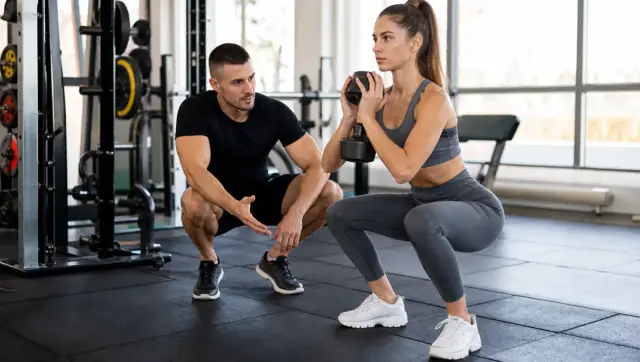
- Squat (barbell, or goblet with a dumbbell): sit your hips back, knees tracking over toes, back neutral.
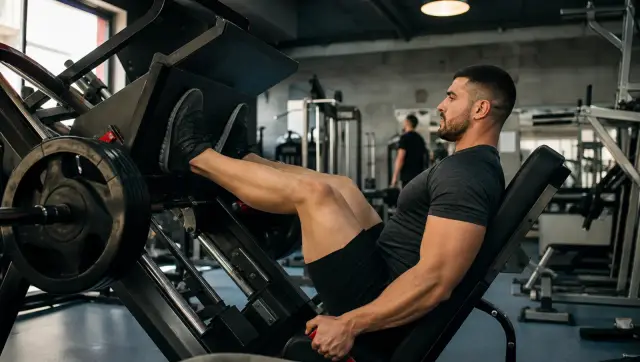
- Leg press: feet mid-platform, hips glued to the seat, knees never locked. Full breakdown in our leg press technique guide.
- Lunge: forward or reverse, back knee close to the floor, torso upright.
- Romanian deadlift: hips back, flat back, feel the stretch in your hamstrings.
- Calf raise: full range with a pause at the top.
Glute exercises
Squats, lunges and deadlifts all work the glutes, but hip thrusts, glute bridges and Bulgarian split squats target them most directly. On hip thrusts, drive through your heels and don't arch your lower back. See the full list in our glute exercises.
Back exercises
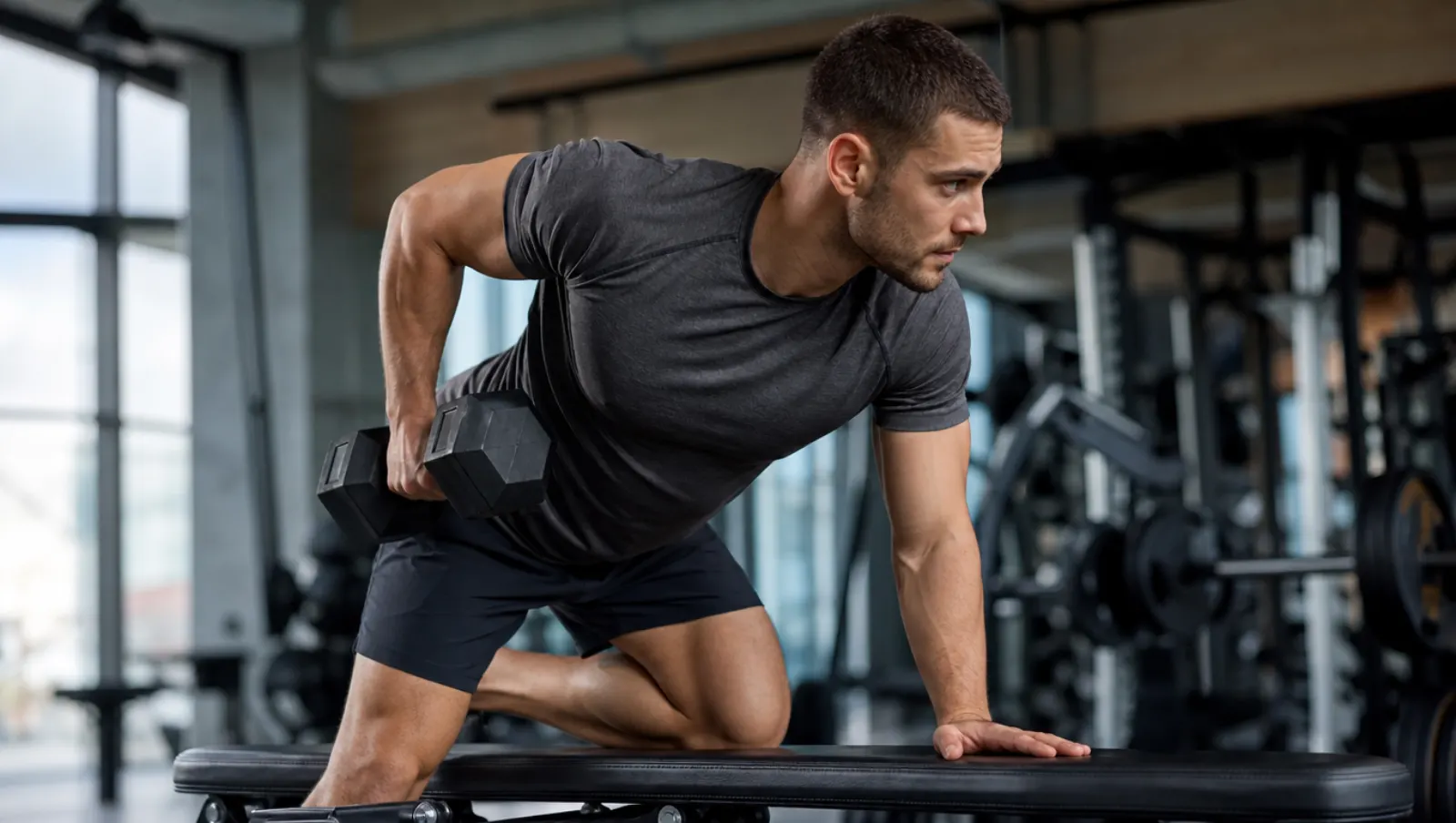
- One-arm dumbbell row: free hand on a bench, drive your elbow towards your hip.
- Lat pulldown: pull the bar to your upper chest, shoulders down, no swinging.
- Pull-up: use an assisted machine or a band until you can do a full rep.
- Seated cable row: chest up, squeeze your shoulder blades together at the end.
- Deadlift: a powerful lift for your whole posterior chain. Learn it with a coach.
For a healthier, less achy back, also read our back exercises.
Chest exercises
- Bench press: shoulder blades back and down, elbows 45–70 degrees from your body.
- Incline dumbbell press: bench at 30–45 degrees for the upper chest.
- Push-up: straight line from head to heels, chest close to the floor.
- Dips: slight forward lean; don't go too deep if your shoulders complain.
Gym and home programmes are in our chest exercises guide.
Shoulder exercises
- Overhead press: brace your abs and glutes, press straight up without leaning back.
- Lateral raise: light weight, slight elbow bend, raise to shoulder height.
- Cable face pull: pull the rope towards your face, elbows high. Great for rear delts and posture.
Arm exercises
- Biceps curl: elbows by your sides, no body swing.
- Hammer curl: neutral grip, also works the forearms.
- Triceps pushdown: elbows pinned, press down to straight arms.
- Overhead triceps extension: one dumbbell overhead, elbows pointing up.
Your arms already work hard on rows and presses, so beginners only need a couple of direct sets each week.
Core exercises
- Plank and side plank: straight line, hips level.
- Dead bug: lower back down, opposite arm and leg extend slowly.
- Hanging knee raise: no swinging.
Ten moves with step-by-step technique are in our ab exercises guide.
How to structure a session
Every good session follows the same simple order:
- Warm-up (5–10 minutes): easy cardio and one or two light sets of your first lift.
- Big lifts first: squat, deadlift, bench press or row, while you're fresh.
- Accessory work: lunges, lateral raises, curls, triceps.
- Core last, so your trunk isn't tired before heavy lifts.
- Light stretching if it helps you wind down.
That usually takes 45–60 minutes.
Workout plans: beginner and intermediate
The American College of Sports Medicine (ACSM) suggests novices start with 1–3 sets of 8–12 reps per exercise. Choose a load where the last two or three reps are hard but your form holds.
Beginner: full body, 2–3 times a week
| Exercise | Sets × reps |
|---|---|
| Goblet squat or leg press | 2–3 × 10–12 |
| Machine chest press or push-up | 2–3 × 8–12 |
| Lat pulldown | 2–3 × 10–12 |
| Dumbbell Romanian deadlift | 2–3 × 10–12 |
| Dumbbell overhead press | 2 × 10–12 |
| Plank | 2–3 × 20–30 s |
Rest 60–90 seconds between sets and take a day off between sessions.
Intermediate: upper/lower, 4 times a week
| Day | Main exercises | Sets × reps |
|---|---|---|
| Upper A | Bench press, cable row, overhead press, biceps curl | 3–4 × 6–10 |
| Lower A | Squat, Romanian deadlift, lunge, calf raise | 3–4 × 6–10 |
| Upper B | Incline press, pull-up, lateral raise, triceps pushdown | 3–4 × 8–12 |
| Lower B | Leg press, hip thrust, Bulgarian split squat, plank | 3–4 × 8–12 |
Rest two to three minutes on the heavy lifts. To plan loads by percentage, use our one-rep max calculator, and to check how much protein you need for recovery, try the daily protein calculator.
Completely new to the gym? Begin with our first gym programme.
Safety
If you have a medical condition, an injury, chronic pain, or you are pregnant, talk to a doctor or physiotherapist before starting a new programme. Stop if you feel sharp pain.
Where to train
You'll need a gym with free weights and machines for most of these exercises. A JetoFit membership gives you access to partner gyms in several cities, including SevenGym and KoSport in Pristina, Gorilla Gym in Fushë Kosovë and Togo Fit in Ferizaj. Equipment varies from gym to gym, so check the details in the app.
Frequently asked questions
How many exercises should I do per workout?
Beginners only need five or six full-body exercises. Intermediates usually do four to six per session, split by muscle group.
How often should I lift weights?
WHO recommends muscle-strengthening activity on at least two days a week. Beginners do well with two or three full-body sessions.
Should I change my exercises every week?
No. Keep the same exercises for six to eight weeks and add weight or reps. Constant changes make progress hard to track.
Can I do these exercises at home?
Many of them, yes, with dumbbells, bands or bodyweight. Leg press, cables and heavy barbell work need a gym.