In short
- See a doctor or physiotherapist before starting exercises for back pain, scoliosis or a herniated disc.
- According to the NHS, most back pain improves within a few weeks, and staying active helps more than bed rest.
- Exercise does not straighten a structural scoliosis curve, but it can help strength, mobility and pain.
- Numbness around the groin or buttocks, or loss of bladder or bowel control, needs urgent medical attention.
Exercise is one of the best tools for a sore back, but it is not the first step. The first step is a doctor or physiotherapist, who can work out what is behind the pain and tell you which movements are safe for you, especially with a herniated disc or scoliosis.
What follows is general information. It does not replace a diagnosis or a programme tailored to you.
Warning signs: get help now
Most back pain is not dangerous. Some symptoms, though, need urgent medical care rather than exercise:
- numbness or altered feeling around the groin, buttocks or genitals;
- trouble passing urine, or losing control of your bladder or bowels;
- leg weakness that is getting worse, or numbness in both legs;
- back pain with a fever or unexplained weight loss;
- pain after a fall, accident or blow to the back.
If any of these apply, do not self-treat.
Back pain: what the evidence says
The NHS notes that back pain usually gets better on its own within a few weeks or months. Its main advice is to keep moving. Walking and gentle activity tend to help more than long periods of bed rest.
For pain that lingers, clinical guidelines such as those from NICE in the UK include exercise as part of treatment. No single exercise is magic. What matters is doing something regularly, progressing slowly and choosing an activity you will stick with.
Herniated discs
Discs sit between the vertebrae like cushions. In a herniated disc, part of the disc bulges out and can press on a nerve, often causing pain that runs down the leg (sciatica). The NHS says sciatica often improves within 4–6 weeks, though for some people it lasts longer.
Principles physiotherapists commonly work with:
- Move, don't immobilise. Short, frequent walks are usually well tolerated.
- Direction matters. Some people feel better bending backwards, others do not. Your physio works this out during the assessment.
- Avoid heavy loading with a rounded back in the early phase.
- Watch the leg symptoms. If pain or numbness spreads further down the leg during an exercise, stop and report it.
Exercise does not "push the disc back in". It helps your body tolerate movement while symptoms settle.
Before your first appointment, it helps to note when the pain started, what makes it better or worse, whether it spreads into a leg, and which activities you would like to get back to. That gives your physio a clear target, whether it is playing with your kids, sitting through a workday or returning to the gym.
Scoliosis
Scoliosis is a sideways curve of the spine. In children and teenagers it is monitored by a doctor and sometimes treated with a brace or, less often, surgery.
Exercise does not straighten a structural curve in adults. It can improve trunk strength, posture, breathing and pain. Scoliosis-specific approaches such as the Schroth method exist, but they should be taught by a physiotherapist trained in them, because the exercises depend on the shape of your curve. General activities like swimming, Pilates and yoga usually work well, as long as the instructor knows your diagnosis.
Six basic back exercises
These are commonly used for non-specific back pain once a professional has cleared you. Move slowly. Mild discomfort that settles quickly is usually fine; pain that builds is not.
| Exercise | What it works | Starting dose |
|---|---|---|
| Pelvic tilt, lying on your back | Lower back and abdominal control | 10 reps |
| Cat-cow on all fours | Spinal mobility | 8–10 reps |
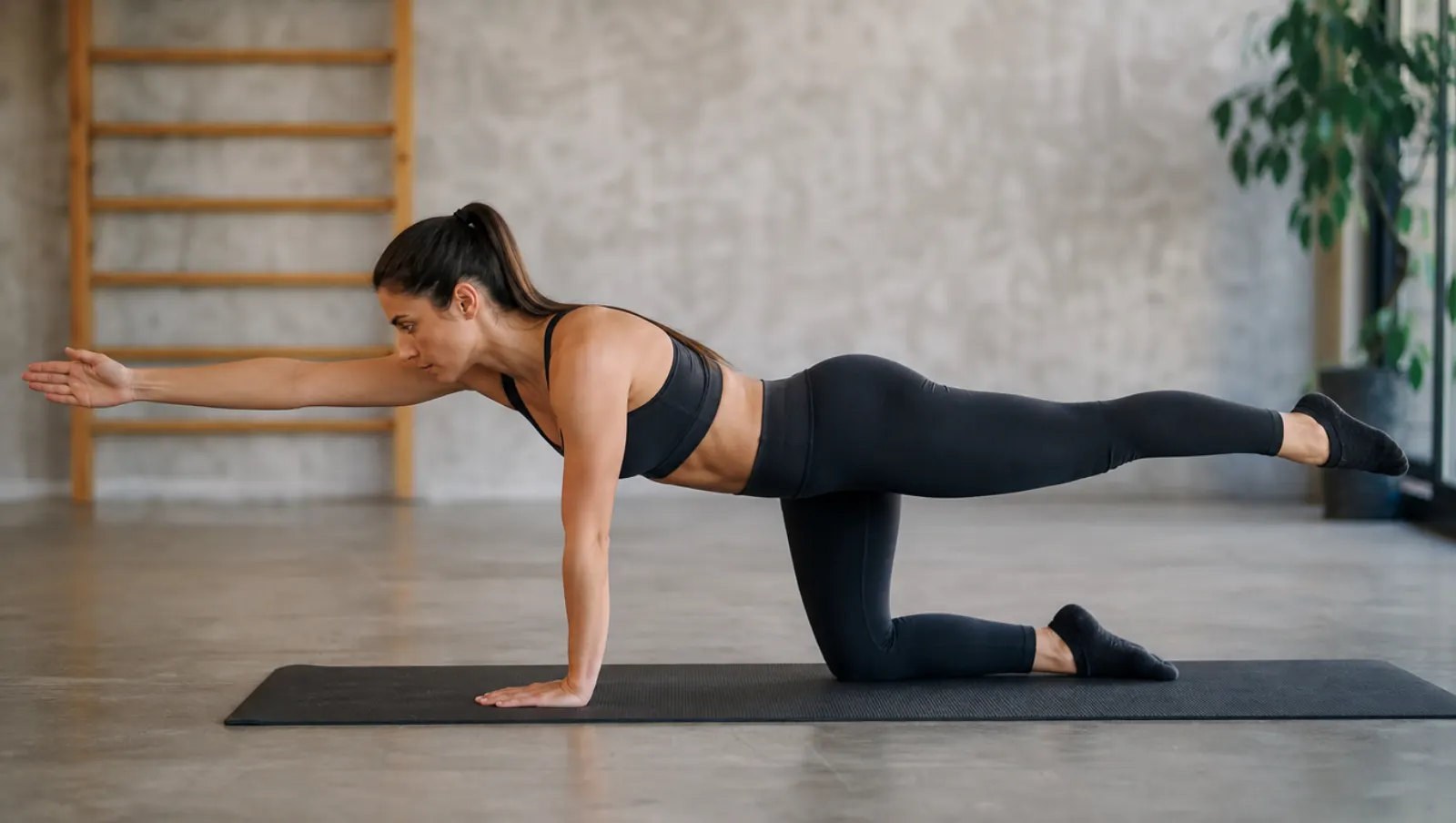
| Bird-dog | Trunk stability | 6–8 per side |
| Glute bridge | Glutes and hamstrings | 10–12 reps |
| Dead bug | Deep abdominal muscles | 6–8 per side |
| Side plank on knees | Side of the trunk | 3 × 15–20 s per side |
Add 20–30 minutes of walking on most days. For more trunk work, see our ab exercises guide.
Pilates, yoga and swimming
Pilates trains control, breathing and the deep trunk muscles. Small classes where the instructor can watch you closely are a good start. In Pristina, try Jetë Pilates, with two studios on Ukshin Kovaçica street and in Pejton; classes are for women only. Curious about the spring-loaded machine? Read our Reformer Pilates guide.
Yoga in its gentler styles improves mobility and helps with the stress that often comes with chronic pain. Options include Bliss Yoga Studio in Pristina and Fenix Multi Centre in Gjilan. Skip deep forward folds until your physio says otherwise.
Swimming takes load off the spine because the water supports your body. Many people with back pain manage backstroke and front crawl well; breaststroke with the head held high bothers some people's neck and lower back. With JetoFit you can swim at Zenit Aquatics Center in Fshati Besi, Pristina, on the Standard plan or higher.
A JetoFit membership lets you combine these on one subscription. Note that swimming starts on the Standard plan, not Basic.
Everyday habits
Sleep, stress and long hours of sitting all affect your back. Get up and move every 30–60 minutes at a desk. If you want a rough look at your weight as part of overall health, the BMI calculator is a starting point, though BMI is only an indicator.
If you are pregnant, have osteoporosis, have had back surgery, or your pain is not improving after a few weeks, speak to your doctor before changing your activity.
Frequently asked questions
What exercises are good for a herniated disc?
There is no universal list. Gentle walking is usually well tolerated, and a physiotherapist chooses specific exercises after assessing which movements ease or aggravate your symptoms.
Can exercise straighten scoliosis?
Exercise does not straighten a structural curve in adults, but it can help strength, posture and pain. Scoliosis in children should be monitored by a doctor.
Should I rest in bed when my back hurts?
The NHS advises against long bed rest. Staying as active as you can, with gentle movement and walking, usually helps recovery.
Is swimming good for back pain?
For many people, yes, because the water reduces load on the spine. Ask your doctor or physio which stroke suits you.