In short
- A reformer is a Pilates machine with a sliding carriage, springs for resistance, a footbar and straps for the hands or feet.
- Springs make each exercise lighter or harder, so Reformer Pilates works for beginners and athletes alike.
- Mat Pilates uses bodyweight and can be done anywhere; reformer classes need a studio and are usually smaller.
- Most people aim for 2–3 Pilates sessions a week to see clear gains in strength and control.
Reformer Pilates is Pilates done on a dedicated machine, the reformer, where springs provide resistance and a padded carriage slides back and forth. Because the resistance can be adjusted for every exercise and every person, it suits almost anyone, from complete beginners to athletes.
If you have done mat Pilates and wonder what the machine adds, or you are thinking about trying a class in Kosovo, here is what you need to know.
What is a reformer
Joseph Pilates developed his method in the early 20th century and designed several pieces of equipment to go with it. The reformer is the best known.
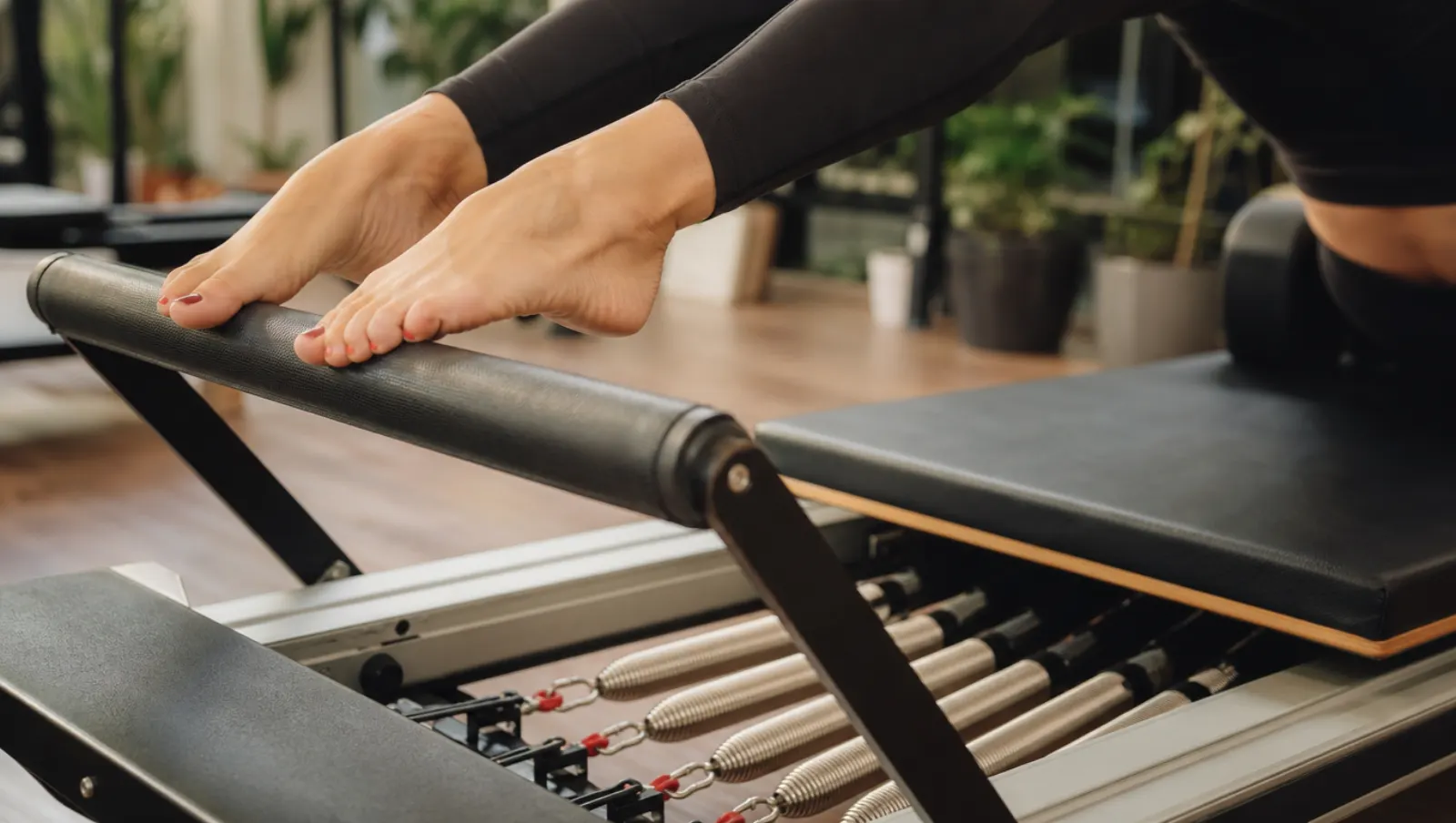
- Carriage: the padded platform you lie, sit, kneel or stand on. It glides along rails.
- Springs: connect the carriage to the frame. You choose how many and how strong.
- Footbar: the bar at one end you push against with your feet or hands.
- Straps with handles: for arm and leg work against resistance.
- Shoulder blocks and headrest: keep you stable and in position.
One thing that surprises beginners: more springs does not always mean harder. In some exercises heavier springs make the carriage steadier and the move easier, while lighter springs demand more control.
Reformer vs mat Pilates
Both share the same principles: breathing, control, focus on the deep trunk muscles and precise movement. The differences are practical.
| Mat Pilates | Reformer Pilates | |
|---|---|---|
| Resistance | Bodyweight, sometimes small props | Adjustable springs |
| Where | Anywhere | Studio with equipment |
| Class size | Can be larger | Usually small, limited by machines |
| For beginners | Needs more core strength from day one | Machine offers support and feedback |
| Variety | Limited by bodyweight | Many exercises and positions |
Neither is better. Mat work teaches you to control your body without help. The reformer adds load and support when a move is still too hard on your own. Plenty of people do both.
Benefits
- Strength without pounding the joints. Movements are controlled with no impact.
- A stronger trunk. Almost every exercise asks the deep abdominal and back muscles to stabilise.
- Mobility. Many exercises combine strength with lengthening.
- Posture. Shoulder and upper-back work helps people who sit all day.
- Easy to scale. An instructor can make the same exercise easier or harder with a spring change.
Pilates is also widely used as part of exercise programmes for chronic low back pain. If that is you, read our guide to back exercises and talk to your doctor or physiotherapist before your first class.
Who it suits
Beginners who want a structured start to strength training, people returning after a long break, runners and other athletes who want a stronger trunk and hips, desk workers who need mobility, and older adults in an appropriately adapted class.
If you are pregnant, recently had surgery, have osteoporosis or an active injury, get clearance from your doctor first and look for an instructor experienced with your situation.
Your first class
- Wear fitted, comfortable clothing so the instructor can see your alignment.
- Bring grip socks. Many studios ask for them for hygiene and safety, so check beforehand.
- Arrive ten minutes early so someone can walk you through the machine.
- Mention any injury or pain before the class starts.
- Go slow. Control is the goal, not the rep count.
Typical first-class exercises include footwork (pressing the carriage away from the footbar while lying on your back), leg circles in the straps, arm work in the straps and simple kneeling stability drills.
Three common myths
"Pilates is just stretching." A reformer class done properly leaves your legs, glutes and trunk working hard. The springs are real resistance.
"You need to be flexible first." Flexibility improves with practice. Instructors adjust ranges of movement for stiff beginners all the time.
"It's only for women." Pilates was developed by a man and has long been used by dancers, athletes and people in rehabilitation of every gender. Many men find it exposes weak spots that gym training misses, especially around the hips and trunk.
How often
Two to three sessions a week is a good target for noticeable improvements. Pilates pairs well with walking, swimming or lifting. The World Health Organization recommends muscle-strengthening activity on at least two days a week, and Pilates can count towards that. For a rough idea of the energy your weekly sessions use, try the calorie calculator.
Where to do Pilates in Pristina
JetoFit's Pilates partner is Jetë Pilates, with two studios in Pristina:
- Jetë Pilates on Ukshin Kovaçica Street, a dedicated Pilates studio.
- Jetë Pilates Pejton on Robert Doll Street.
Both studios run women-only classes. For men, or anyone after similar mobility work, Bliss Yoga Studio offers yoga in Pristina.
Class formats vary by studio, so check in the JetoFit app or ask the studio whether a class is on the reformer or the mat, and confirm the current timetable. For a wider overview, see our guide to Pilates in Pristina.
A JetoFit membership lets you try both studios and other sports on one subscription and find the style that fits.
Frequently asked questions
Is Reformer Pilates good for beginners?
Yes. The springs can be set to make exercises easier, and the machine gives support and feedback that help you learn correct movement.
What's the difference between Reformer and mat Pilates?
Mat Pilates uses bodyweight and can be done anywhere. Reformer Pilates uses a spring-loaded machine that adds resistance and support, and it takes place in a studio.
How often should I do Reformer Pilates?
Two to three sessions a week is a good target for building strength, control and mobility.
What should I wear to my first Reformer class?
Fitted, comfortable clothes and grip socks if the studio requires them. Check the studio's rules before you go.